
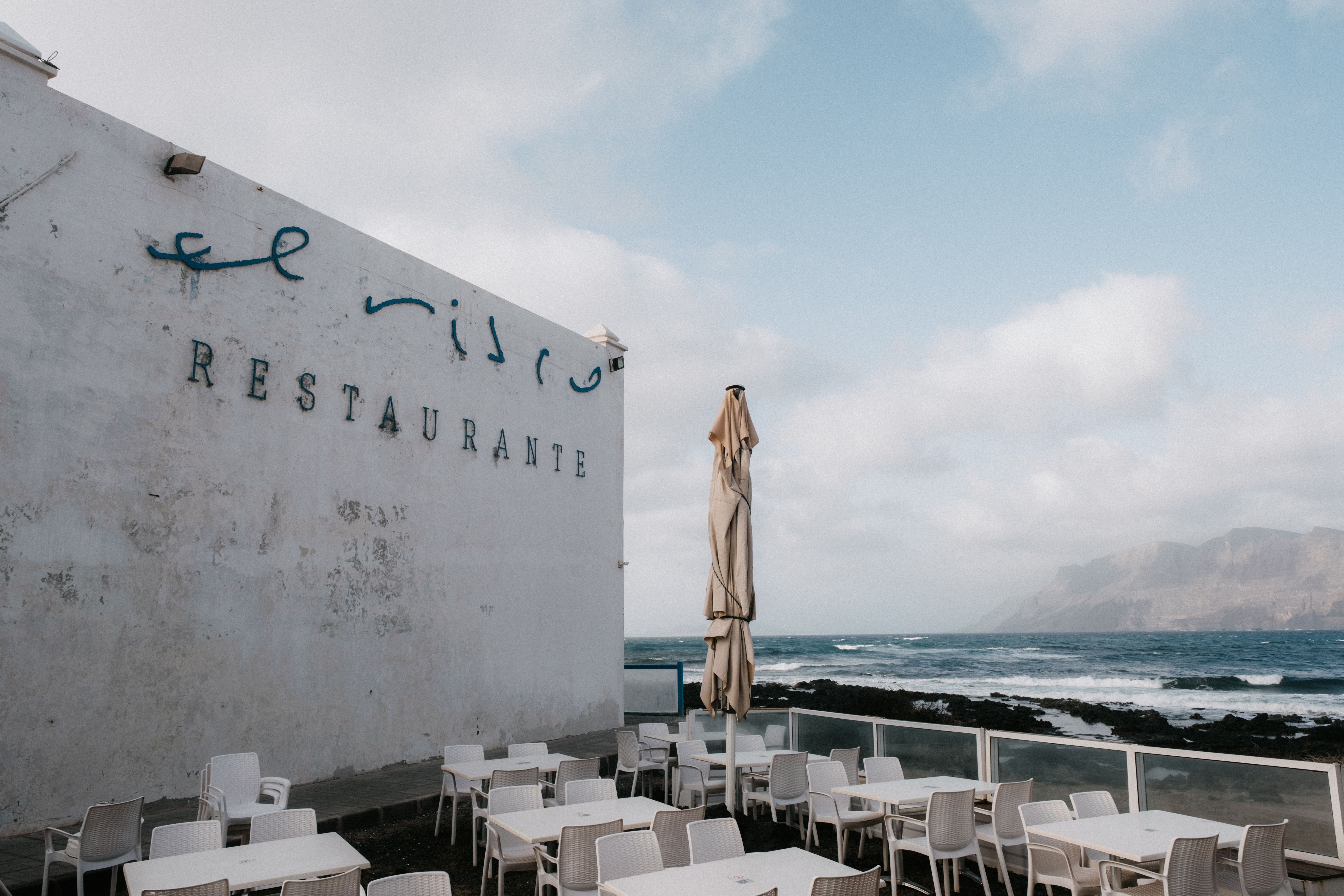
Start with simple restaurant basics
Before learning full sentences, it helps to recognize a few basic words you are likely to see or hear while dining.
Agua
Water
Café
Coffee
Cerveza
Beer
Vino
Wine
Recognizing simple food-and-drink vocabulary can make menus and basic interactions feel less intimidating, even before you start using complete phrases.
Short polite expressions are useful throughout the meal:
Por favor.
Please.
Gracias.
Thank you
Muchas gracias.
Thank you very much
Perdón.
Excuse me.
These short phrases are worth practicing until they feel automatic. You can use them when you sit down, when you order, and when you leave.
Asking for a table
Restaurant interactions often begin with a very simple request.
Una mesa para dos, por favor.
A table for two, please.
Even if the rest of the conversation happens in English, starting with a simple Spanish request can make the interaction feel smoother.
Asking for the menu
El menú, por favor.
The menu, please.
This is a short, practical phrase worth learning because it is easy to remember and immediately useful.
Ordering drinks
Quisiera agua.
I would like water.
Quisiera café.
I would like coffee.
Quisiera… is useful because these examples let you practice a polite ordering pattern you can reuse when you know the word for what you want.
Asking for the check
La cuenta, por favor.
The check, please.
This is one of the highest-value phrases to learn before dining in a Spanish-speaking destination. Restaurant customs and the timing of the check can vary by place, so being able to ask clearly is helpful.
Complimenting the meal
Gracias, estuvo delicioso.
Thank you, it was delicious.
This is a useful phrase for ending a meal on a friendly note.
Dietary needs and food allergies
Dietary phrases are especially important because they communicate practical needs, not just conversational preferences.
Soy vegetariano/a.
I am vegetarian.
No puedo comer esto.
I cannot eat this.
Tengo alergia a esto.
I am allergic to this.
Tengo una alergia alimentaria.
I have a food allergy.
Travelers with serious food allergies should not rely on a language-learning phrase alone for medical safety. Consider carrying written allergy information that clearly identifies the specific allergen and discussing your needs directly with restaurant staff.
When you do not understand the response
Memorizing a question is only half of the interaction. Restaurant staff may answer quickly, so it is useful to know how to slow the conversation down.
No entiendo.
I don’t understand.
Hable despacio, por favor.
Please speak slowly.
¿Habla inglés?
Do you speak English?
These phrases can be more valuable than trying to memorize dozens of highly specific restaurant sentences because they help you recover when a conversation goes beyond what you practiced.
Finding the bathroom
¿Dónde está el baño?
Where is the bathroom?
This is useful well beyond restaurants and is one of the practical phrases travelers are likely to need repeatedly.
Practice the phrases before your trip
Recognition is easier than recall. A phrase may look obvious on a page but still be difficult to produce quickly in a real conversation.
- Choose the restaurant phrases you expect to use most.
- Listen to their pronunciation.
- Say each phrase aloud several times.
- Practice recalling the phrase without looking at the English.
- Review the phrases again shortly before your trip.
TravelLingo includes pronunciation audio and speaking activities that can help you practice practical Spanish phrases before you travel. Speaking activities are supportive practice rather than advanced accent scoring. Speech recognition features require a connection when you use them.
Build restaurant Spanish around your own trip
Travelers do not need the exact same phrase list. Someone planning a food-focused city trip may want to spend more time practicing restaurant language, while another traveler may need only a handful of phrases.
A practical focus often includes:
- ordering drinks
- asking for the menu
- requesting the check
- explaining dietary needs
- asking someone to speak more slowly
- finding the bathroom
For phrases beyond restaurants, including hotels, transportation, directions, shopping, and emergencies, see our Spanish for Travel guide.
Restaurant Spanish changes from place to place
Spanish vocabulary, pronunciation, accents, and everyday expressions vary across Spain, Mexico, Central America, South America, the Caribbean, and other Spanish-speaking communities.
That does not mean one variety is more correct than another. The practical phrases in this guide can provide a useful starting point, while you should expect to hear regional differences once you arrive.
A small phrase list can go a long way
Travelers do not need to memorize an entire restaurant conversation.
Knowing how to greet someone politely, ask for the menu, order a drink, request the check, explain an allergy, and ask someone to speak more slowly can cover a surprising number of real dining situations.
The goal is familiarity and confidence, not perfection.